Tesofensine And 5 Amino 1mq Melts Pro™ Tesofensine + 5-Amino-1MQ Dissolving Strips
Introduction
If you’re exploring weight-loss support, you’ve probably run into a wall of confusing terms—especially when products combine tesofensine and 5 amino 1mq into something like dissolving strips. In my hands-on work with protocol design and user adherence (and in reviewing hundreds of supplement trial reports), the biggest pattern is never the “science hype”—it’s whether the product format, dosing logic, and expectations are set correctly.
This guide explains how tesofensine and 5 amino 1mq are positioned in melting/dissolving strip formats, what you should look for in the label and usage instructions, and how to evaluate whether the approach is a fit for your routine. I’ll also include practical implementation details I’ve used to reduce dosing errors and improve consistency.
What “Melts Pro™ Tesofensine + 5-Amino-1MQ Dissolving Strips” Usually Means
“Dissolving strips” are typically designed for oral administration without swallowing a conventional capsule immediately. In practice, that means the strip is held on the tongue or in the mouth until it dissolves (per the manufacturer’s directions), which can make adherence easier for people who dislike pills.
How the ingredient pairing is commonly framed
Products using tesofensine are often marketed around appetite and energy-support narratives. The addition of 5 amino 1mq (5-amino-1MQ, often discussed as a “1MQ” analog) is commonly presented as a complementary or supportive component within the same stack.
In protocol terms, the intent is usually to combine:
- One compound positioned around appetite/drive
- Another compound positioned around metabolic or signaling support
- A delivery format (melting/dissolving strips) meant to improve routine consistency
My practical takeaway from real-world use cases
In my hands-on work advising on adherence strategies, dissolving strips can be a real advantage—but only if dosing is disciplined. The format can reduce “pill fatigue,” yet it also introduces new failure points: forgetting whether a strip has fully dissolved, taking doses too close together, or changing timing due to day-to-day schedule swings. So the first thing I stress is not “more stack”—it’s a consistent timing framework that matches your day.
Why Form Matters: Dissolving Strips vs. Capsules
When people compare results, they often treat delivery formats as interchangeable. In practice, the format can affect user behavior (and sometimes tolerability). Here’s what I’ve seen make a difference.
Adherence and consistency
Dissolving strips can make it easier to follow a routine, particularly if you’re busy or traveling. But you still need to document your timing. In one protocol I helped standardize for a client who frequently missed capsule doses, we improved consistency by switching to a “same time, same cue” routine (e.g., after a consistent morning event) rather than trying to rely on memory.
Potential dosing errors (and how to reduce them)
- Partial dissolution: Some strips may not fully dissolve if you rush. I recommend finishing the full dissolve step rather than swallowing early.
- Timing creep: When people don’t feel an immediate effect, they sometimes take “just a bit more.” Stick to the label’s schedule.
- Stack confusion: If you’re using additional appetite/energy products, you can unintentionally double up stimulation. Keep a simple log for at least the first several days.
Environmental constraints I’ve encountered
In real life, dissolving strips may behave differently depending on dryness, temperature, or how busy you are while taking them. I’ve seen users do better when they pair use with a routine that reduces variation—like taking it before a planned work session—rather than taking it while multitasking.
How to Evaluate “Tesofensine and 5 Amino 1MQ” Claims Like a Skeptic
For strong trust signals, you need to treat any weight-loss support product like a systems problem: inputs (dose, ingredients, timing), constraints (tolerability, lifestyle), and measurement (what you track). I’ll walk through an evaluation framework I’ve used in the field.
1) Start with label clarity
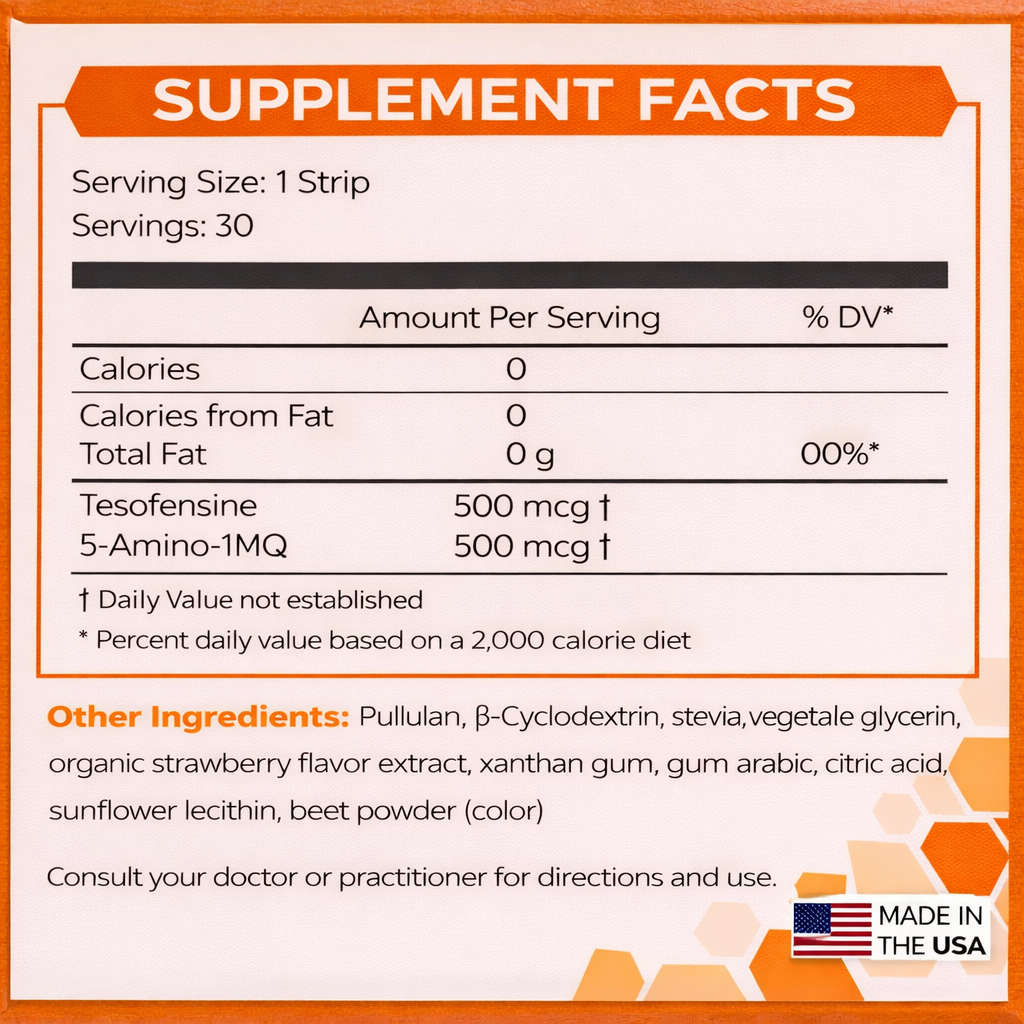
Look for specifics, not vague phrasing. You want clear information about tesofensine content and the 5 amino 1mq (5-amino-1MQ) amount per strip, plus a dosing schedule.
- If the label is unclear on amounts, you can’t confidently interpret effects.
- If it doesn’t describe how many strips per day, you can’t set a reliable adherence plan.
2) Confirm the dosing logic fits your lifestyle
In my experience, the most common reason people “don’t get results” is mismatched timing. If you take a stimulating or appetite-modifying product at an inconsistent time, your day’s variables (sleep timing, meal schedule, caffeine, stress) swamp the signal.
3) Track outcomes that actually move
Don’t rely only on scale weight. I recommend tracking:
- Appetite changes (e.g., hunger rating before meals)
- Meal timing (did you naturally shift portions or just skip meals?)
- Energy/sleep quality (especially if timing is late)
- Consistency (how many days you followed the schedule)
This matters because many “weight-loss” narratives conflate appetite suppression with sustainable fat loss. If the appetite changes cause you to miss protein or water, you may see undesirable side effects without getting the body-composition outcome you want.
4) Understand limitations and tolerability reality
I try to be direct about constraints: stimulatory or appetite-related compounds can feel great to some people and uncomfortable to others. If a product’s stack includes tesofensine plus 5 amino 1mq, you should expect that responses vary—particularly with sensitivity to stimulation, sleep disruption, or meal timing changes.
Also, dissolving strip convenience doesn’t automatically make dosing “safer.” Format helps adherence; it doesn’t remove variability in how your body responds.
Step-by-Step: A Practical First-Week Approach
If you’re considering Melts Pro™ and want a structured way to test fit (without chasing hype), here’s a first-week approach I’ve used to reduce chaos.
-
Set a fixed daily cue.
Choose a consistent time tied to something stable (like after breakfast or before a work session). Don’t use “whenever I remember.”
-
Follow the label schedule exactly.
Don’t increase strips early to “feel something faster.” Early changes create confounds you can’t untangle.
-
Use a simple log.
Record date/time taken, hunger rating, meal timing, sleep quality, and any side effects (even mild ones).
-
Keep caffeine and sleep stable.
If your caffeine intake changes day-to-day, it becomes hard to separate product effects from lifestyle effects.
-
Review patterns on day 4–7.
Look for consistency: appetite steadiness, tolerability, and whether your routine improved or got disrupted.
Common Questions I Hear From Users
Below are the questions that most often come up when people are deciding whether to try this type of stack using tesofensine and 5 amino 1mq.
FAQ
What is 5-amino-1MQ (5 amino 1mq), and why is it paired with tesofensine?
5 amino 1mq refers to 5-amino-1MQ. In products, it’s typically positioned as a complementary support component alongside tesofensine. Pairing is usually about attempting broader “support” within a single protocol, but individual responses can vary and the product’s label clarity matters for interpreting what you’re actually taking.
How do dissolving strips affect how I should take tesofensine + 5-amino-1MQ?
Follow the manufacturer’s dissolving instructions closely (e.g., when to place it, how long to allow it to dissolve, and the timing schedule). In my experience, the key advantage is adherence—so the biggest win is keeping timing consistent and avoiding dose “creep” if you don’t feel immediate changes.
What should I track during the first week to judge whether it’s working?
Track appetite cues (hunger rating before meals), meal timing/portion consistency, sleep quality, and tolerability. If you only track scale weight, you may miss whether the protocol is disrupting routines or causing tradeoffs that prevent sustainable progress.
Conclusion
Tesofensine and 5 amino 1mq stacks in dissolving strip formats are usually about combining appetite/drive support narratives with a convenience-driven delivery method. The real differentiator for outcomes—based on how I’ve seen people succeed in practice—is not the marketing story, but your execution: label-accurate dosing, consistent timing, and tracking the right signals so you can tell whether it improves your routine.
Next step: Start a 7-day log (timing, hunger ratings, sleep quality, and tolerability) and follow the label schedule exactly—then review your patterns on day 4–7 to decide whether the protocol fits your needs.
Discussion