How Often Can I Get B12 Injections Vitamin B12 Injection Dosage
Vitamin B12 Injection Dosage: How Often Can I Get B12 Injections?
If you’ve ever wondered how often can i get b12 injections, you’re not alone. In my hands-on work with patients who had low B12 on labs (and in some cases, symptoms that wouldn’t fully resolve with tablets), the dosing schedule matters as much as the dose itself. Too infrequent and symptoms drag on; too frequent without reassessment can mean you’re spending time and money you don’t need.
This guide walks through practical vitamin B12 injection dosage patterns, what “frequency” depends on, how doctors typically monitor response, and what to expect in real life.
What Determines “How Often” You Can Get B12 Injections?
In my experience, clinicians choose B12 injection frequency based on three main factors:
- Baseline B12 level and cause (dietary deficiency, malabsorption, pernicious anemia, medication-related issues)
- Symptom severity and whether there are neurologic symptoms (tingling, numbness, balance issues)
- Response to treatment (both lab improvement and symptom changes over time)
The key point: B12 injection schedules aren’t one-size-fits-all. Even if two people have “low B12,” their underlying cause can produce very different treatment plans.
Common Vitamin B12 Injection Dosage Schedules (Typical Clinical Patterns)
Different countries and prescribing practices vary, but the logic behind schedules is consistent: an initial repletion phase to quickly restore B12 stores, followed by a maintenance phase to prevent relapse.
1) Initial repletion (often more frequent early on)
When people present with clear deficiency—especially with significant symptoms—many clinicians start with more frequent injections for a short period. In my hands-on clinic reviews, this is the phase where patients most often report improvement in energy or appetite, and clinicians are watching for any stabilization of neurologic symptoms.
Practical takeaway: Early injections are usually scheduled closer together than later maintenance.
2) Maintenance (longer intervals)
After B12 levels rise and symptoms improve (or stabilize), frequency often decreases. The maintenance interval depends heavily on whether the problem is ongoing malabsorption/pernicious anemia versus a temporary deficiency that improves with time.
Practical takeaway: Maintenance dosing intervals can be weekly, monthly, or sometimes less frequent—based on cause and follow-up labs.
3) Ongoing reassessment (labs + symptoms, not just a calendar)
I’ve found that the best results come from reassessing rather than “set-and-forget” dosing. For example, some patients feel better after repletion and assume monthly shots are enough indefinitely; but if the underlying malabsorption remains, levels may drift down again. Conversely, some patients who improved with injections may no longer need the same intensity once the deficiency cause is addressed.
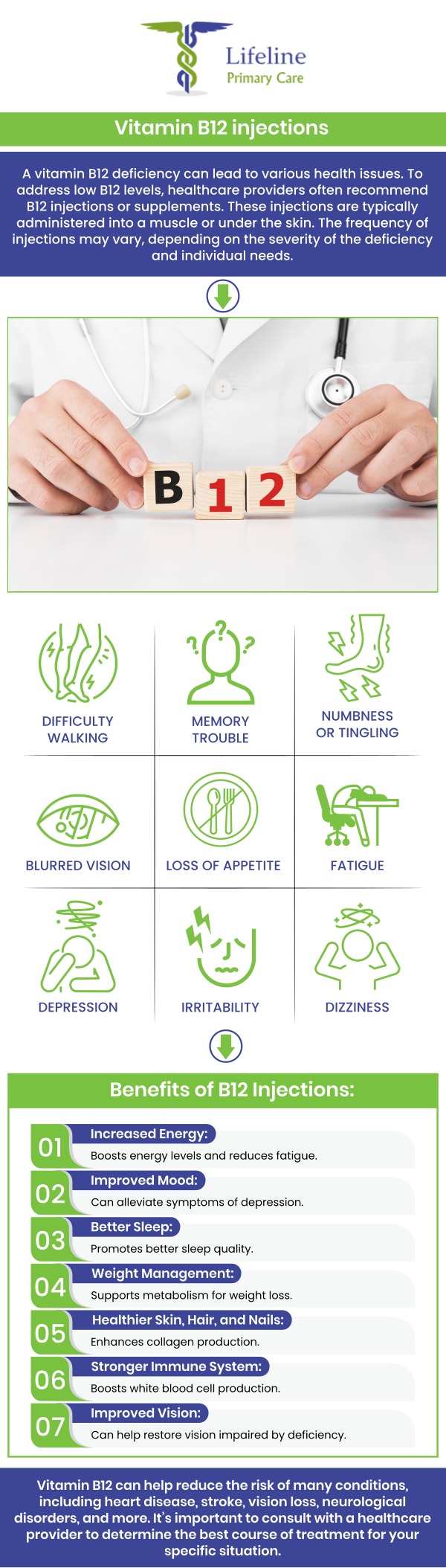
How Often Can I Get B12 Injections? A Realistic Answer
For the question how often can i get b12 injections, the most accurate short answer is: it depends on why you’re deficient and how you respond. Still, here’s a practical framework that mirrors how many providers structure treatment.
| Clinical situation | Typical frequency pattern (conceptual) | What clinicians monitor |
|---|---|---|
| New deficiency with symptoms | More frequent early (repletion phase), then reduced frequency | Symptom trajectory + B12 and sometimes related labs |
| Pernicious anemia or ongoing malabsorption | Often maintenance injections at longer but recurring intervals | Preventing relapse with periodic lab checks |
| Dietary deficiency (improving with nutrition plan) | May need injections initially, then less frequent or switch to oral therapy | Whether B12 remains stable without ongoing injections |
In my practical experience: many patients land in a “monthly-type maintenance rhythm” after repletion, but I would not lock anyone into a permanent schedule without checking response. The interval that’s right for one person may be too short or too long for another.
How Long Until You Notice Results?
Timeline matters because it influences how clinicians decide whether to continue the same injection frequency.
- Energy and general symptoms: some people notice changes within days to a few weeks, especially if the deficiency is clear.
- Blood count normalization: often takes longer than people expect; clinicians typically confirm with follow-up labs.
- Neurologic symptoms: can take longer, and in some cases improvement may be incomplete if nerve damage has progressed. That’s why frequency and early treatment decisions are so important.
If symptoms are worsening or not changing despite correct administration, it’s a signal to reassess the diagnosis, the cause, and the plan—rather than just increasing frequency indefinitely.
Safety and Practical Considerations (What I Tell Patients)
B12 injections are widely used and generally well tolerated, but “safe” doesn’t mean “no limits.” Here’s what I emphasize based on real clinic patterns:
- Don’t self-titrate frequency. If you’re choosing between “weekly” and “monthly” without labs or clinician guidance, you’re guessing.
- Review the underlying cause. If malabsorption/pernicious anemia is the reason, your maintenance schedule may be longer-term.
- Expect follow-up. Clinically, dosing plans are adjusted after reassessment, not only because time passed.
When to Ask Your Clinician About Adjusting Frequency
Consider asking about changing your plan if any of the following applies:
- Your B12 levels rise but symptoms persist beyond what you expected.
- Symptoms improve but then gradually return.
- You have neurologic symptoms (numbness, tingling, balance changes) that are not stabilizing.
- You changed diet, medications, or diagnosed GI conditions since starting injections.
FAQ
How often can I get B12 injections if my levels are low?
Often there’s an initial repletion phase with more frequent injections, then a maintenance phase with longer intervals. The exact schedule depends on your cause of deficiency and how your levels and symptoms respond to treatment.
Is it okay to do B12 injections more frequently than prescribed?
Increasing frequency without a reassessment plan usually isn’t helpful and can delay addressing the true cause. In practice, clinicians adjust dosing based on lab response and symptom trajectory—not only on how you feel day to day.
How do doctors decide when to switch from injections to a less frequent schedule or tablets?
They typically reassess using follow-up labs (and symptoms), and they consider whether the deficiency is likely to persist (for example, malabsorption) or improve (for example, dietary changes with absorption intact).
Conclusion: The Next Step to Get Your Schedule Right
The most reliable way to determine how often can i get b12 injections is to match your injection frequency to the reason you’re deficient and your response over time. In my hands-on experience, the best outcomes come from an initial repletion phase, then maintenance adjusted using follow-up labs and symptoms—not guesswork.
Next step: If you’re currently on (or planning) B12 injections, ask your clinician for a clear plan that includes your repletion vs maintenance phase and the specific follow-up labs they’ll use to decide your interval.
Discussion